
How to Regulate Your Nervous System
Why it matters, how it affects us, and what we can do to feel better
Regulate Your Nervous System: Start Here
A lot of us have felt overwhelmed, anxious, or “on edge,” even when nothing obvious is wrong. If that sounds familiar, let’s remember we are not alone—and we are not necessarily doing anything wrong. Our nervous system is designed to protect us. The same system that helps us react quickly in dangerous situations is also active during everyday stress. Sometimes it just stays “on” longer than we would like.
Understanding how our nervous system works is one of the most helpful steps we can take toward improving both our physical and mental well-being.
What Is the Nervous System?
Our nervous system is our body’s internal communication system. It gathers information from our environment and our body, processes that information, and sends signals that tell our body how to respond. Most of this happens automatically, without conscious effort. In fact, our nervous system often reacts before our thinking brain has time to catch up.
The brain is the central organ responsible for interpreting stress and coordinating physical and emotional responses across the body, which is why stress can feel both mental and physical at the same time.
The Two Main Modes of the Nervous System
Our nervous system shifts between two primary states depending on what it senses. When these systems work together, we feel balanced and adaptable. When they are out of sync, we may feel overwhelmed, anxious, or drained.
The “Go” System (Sympathetic Nervous System)
This is our body’s action system. It activates when our brain senses challenge, pressure, or potential danger—even if that “danger” is a stressful thought or a busy schedule. The ‘Go’ mode helps us focus under pressure. When this system is activated, our brain sharpens attention so we can respond quickly. This can be helpful during tasks like meeting deadlines, but when it stays on too long, it may feel like racing thoughts or difficulty concentrating. ‘Go’ mode prepares the body to respond to challenges by increasing energy and readiness so we can act. This system increases heart rate and breathing to prepare for action. While this can feel like motivation in short bursts, it can also show up as anxiety or feeling “wired” if it continues for too long. This is why we may feel restless or unable to “turn off” after a stressful day.

“Go Mode” (Sympathetic Nervous System)
- This is our body’s action system.
- It helps us:
- Stay alert and energized
- Focus under pressure
- Respond to challenges
The “Slow” System (Parasympathetic Nervous System)
This is our body’s calming and recovery system. It activates when our body senses safety and allows us to rest and restore. In ‘Slow’ mode we are able to relax, unwind, rest, restore energy and digest food. When this system is active, our body reduces tension and slows physical processes. This is what allows us to feel calm and settled after a stressful experience.
The body prioritizes functions like digestion when it feels safe. This is why stress can sometimes lead to stomach discomfort—our body is not in rest mode. ‘Slow’ mode also supports sleep and recovery. It helps the body repair itself, both physically and emotionally, after stress.

“Slow Mode” (Parasympathetic Nervous System)
This is our body’s calming and recovery system.
It helps us:
- Rest and restore energy
- Relax and unwind
- Digest food
How to Regulate Your Nervous System When You Feel Stressed
Our nervous system is constantly scanning for anything that might require our attention. Importantly, it not only responds to real danger—it also responds to perceived stress. This means our body can activate a stress response when we are overwhelmed with responsibilities, worried, unrested or anticipating future problems.
It’s important to really hear this: our thoughts affect our nervous system. During this response our heart rate and breathing increases, our muscles tighten and thoughts speed up. In short periods, this is helpful. It increases focus and performance. However, when stress is ongoing, it can create strain on the body over time. When the body hits the ‘alert’ button, we may need to intentionally hit the ‘reset’ button.
It can sometimes feel like we are stuck in a stress response. The nervous system is very good at turning on quickly. The challenge is that in modern life, it doesn’t always turn off as easily. Here is a deeper look at why that happens. We will break it down into simple, understandable pieces.
This is a simple explanation of the stress cycle. When activated, the brain notices something that feels stressful, like a demand or threat—this could be a real situation (like conflict) or even a thought (like worrying about the future).
The Nervous System Cycle
The nervous system responds by turning on the “go mode.” Our heart rate increases, our muscles tighten, and our minds become more alert so we can deal with what’s happening. Our body expects some kind of action or movement—like running, speaking, or physically responding to solve the problem. This step is what helps our body release the built-up energy from stress.
Once the situation is complete, our body can shift back into “slow mode,” then our heart rate settles, our breathing slows, and we feel more relaxed again. This reset is a return to calm.
The system works well but it was designed for short-term, physical stress. Modern life is very different. Ongoing responsibilities like work, family, finances, or our never ending ‘To Do List’ affect us differently than a critical event that needs to be overcome. Unlike short bursts of danger in the past, these and many other modern stressors don’t have a clear end point. Our brain keeps detecting “unfinished business,” so our body stays in a state of readiness. Our nervous system is regularly being stimulated by new alerts and information which makes it harder for our brain to recognize when it is safe to truly rest.
Stuck in Go Mode
The body doesn’t always complete the stress cycle. Our body prepares to act when stressed, but if there is no physical movement (like walking, running, or even shifting posture), that built-up energy can stay stored in the body. Similarly, when stress stays in our thoughts—like replaying conversations or worrying about the future—the body doesn’t get a clear signal that the situation is over, so it stays activated. An example might be a stressful work email.
Our body reacts by increasing our heart rate and tensing our muscles. We sit still, keep thinking and push through the day. Our body never completes the “release” step so it stays partly activated, waiting for closure. Our nervous system is basically asking: “Did we handle that? Are we safe now?” Without movement or resolution, the answer stays unclear. So the system stays in ‘go’ mode just in case.
Because the brain learns patterns over time, repeated stress can become familiar. If the nervous system is activated often, it can begin to treat that state as the “new normal.” Over time, the body may stay on alert even when it doesn’t need to. The more time we spend in stress mode, the easier it becomes to get triggered. Things that once felt manageable may start to feel overwhelming more quickly. Our threshold for stress activation can become shorter.
When the Nervous System Gets Stuck
Calming doesn’t always happen automatically. The ‘off switch’ sometimes needs support.The part of our nervous system that helps us relax—the parasympathetic nervous system—sometimes needs intentional support, especially after prolonged stress. When our body is tired, dehydrated, or overloaded, it becomes harder for our system to shift into a calm state. Basic care like sleep and nourishment plays a bigger role than most people realize. Our physical needs affect regulation.
Our nervous system is designed to prioritize survival, not comfort. It would rather overreact than miss something important, even if that means unnecessary stress. If something has felt stressful before, our nervous system may stay on alert to prevent it from happening again. This can happen even when there is no current danger.
An activated nervous system that hasn’t got the ‘all clear’ can feel stuck in go mode with nowhere to go. When our nervous system doesn’t fully reset, it can show up in ways like our body staying in a subtle state of alertness, even when nothing urgent is happening. Trying to rest may feel uncomfortable or unnatural, because our system is used to being active.
Our brain may keep scanning for problems or replaying events, making it harder to focus or slow down. Our body may not feel settled enough to fully rest, even when we are tired. Feeling wired but tired can be an example of this. The body is exhausted, but the mind still feels active.
Signs Our Nervous System May Need Support
Our body often gives clear signals when it needs help settling down. These signals can show up in different areas. It’s important to remember these are not personal failures. They are the body’s way of asking for support. It may be time to regulate your nervous system.
Thoughts
When our thoughts are racing it can feel like our mind is moving faster than we can keep up with. This can happen when our nervous system is trying to process too much information at once. In this state it can be difficult to focus. When the brain is in alert mode, it prioritizes scanning for potential problems instead of concentration. This can make even simple tasks feel harder.
When our system is activated, our body is more sensitive to stress.
Emotions
Small things may have a bigger emotional impact than they normally would. Our system may struggle to manage incoming demands, making everything feel like “too much.” Sometimes, instead of feeling too much, the body reduces feeling altogether as a protective response. Stress can leave us feeling anxious, irritable, overwhelmed or numb and disconnected.
Bodies
Our body prepares for action by tightening muscles. This tension can build up in areas like the neck, shoulders, or jaw. We may feel exhausted but unable to relax. This happens when our system is stuck between “go” and “slow.”
We can feel tired but restless. This can lead to sleep problems. A stressed nervous system makes it harder to fall or stay asleep because our body does not feel fully safe enough to rest.
Activity
Avoiding tasks or situations or staying constantly busy have the same effect; it’s hard to relax.Avoidance is often a way our nervous system tries to reduce stress. While it can help in the short term, it may increase stress over time. Keeping busy on the other hand, can sometimes be a way to avoid slowing down. This can prevent our system from entering recovery mode. When our nervous system is used to being active, slowing down can feel uncomfortable—even when we really need it.

Meet the Vagus Nerve: Our Body’s Built-In Calm Switch
If there’s one part of our nervous system to understand, it’s the vagus nerve. This long nerve connects our brain to our heart, lungs, and digestive system. It plays a central role in the parasympathetic nervous system—the system that helps us rest, recover, and regulate. We can think of it as our body’s “calm pathway.” It is the key to regulating your nervous system.
When it is functioning well our body is relaxed while still able to respond to what is happening around us. This is the ideal balance for daily life, calm but alert. Our emotions feel manageable and we’re better able to process them without becoming overwhelmed. After something stressful, our body is able to return to baseline more quickly. Recovery becomes easier. When the vagus nerve is under-supported, we may notice feeling “on edge”, a difficulty calming down, fatigued or shutdown.
The vagus nerve is key to how our body moves out of stress and back into safety. Research shows that activating vagal pathways increases parasympathetic activity and improves heart rate variability (HRV)—a key marker of resilience and emotional regulation. Breathing practices in particular have been shown to enhance vagal tone and reduce stress and anxiety.
Even brief breathing practices (as short as a few minutes a day) can improve mood and reduce physiological stress responses.
Simple Ways to Activate Our Vagus Nerve

Breathing
Longer exhales signal safety.Extending our exhale helps activate the calming system in the body, telling the brain that it can start to relax. A steady breathing pattern gives our nervous system something stable to focus on, which can reduce internal chaos. This predictable rhythm helps us to calm the body. Try this: Inhale for 4 seconds. Exhale for 6–8 seconds. Repeat for a few minutes.
Grounding
Grounding techniques can help shift attention to the present moment, interrupting stress patterns and activating calming systems. Looking around updates the brain. When we take in our surroundings, our brain gathers new information that helps it reassess whether we are safe. Bringing attention out of our thoughts helps interrupt loops of worry and shifts our focus to what is actually happening in the present moment. Try this: name 5 things you see, 4 things you hear, 3 things you feel.
Vocalizing
Our voice can play a powerful role in calming the vagus nerve. Slow, gentle humming, singing, chanting, or speaking in a calm, steady tone can stimulate the vagus nerve. These activities may help shift the body out of a stress response and into a state of greater calm, safety, and regulation. The voice can be a simple tool to help support nervous system balance and emotional well-being. Try this: humming, repeating a mantra, or mindful singing.
Connection
Connecting with someone helps calm our system. Being with a safe person can help our nervous system relax more quickly than trying to do it alone. Connection with another person or a pet is one of the strongest cues our brain uses to determine that everything is okay. Safety is signaled through connection.
Basic Needs
The body has basic needs that help it to feel supported and well. Sleep allows true reset. Our nervous system uses sleep to recover and recalibrate. Without it, stress responses can become more intense and harder to regulate. Hydration and nourishment support brain function. When our body has what it needs physically, it becomes much easier to feel stable emotionally. Drinking water consistently and keeping regular sleep hours are simple things we can do to nurture our bodies.
Moving
Movement can help release stored stress energy. Even small movements can help our body complete the stress response it originally prepared for. Movement can help our nervous system shift from preparation into completion, allowing it to settle. It signals ‘the action is over’. Let’s explore movement a little further.
How Movement Regulates Our Nervous System (and Why It Helps Us Feel Better)
Movement is one of the most effective—and often overlooked—ways to support our nervous system. Research shows that physical activity can improve our body’s ability to move between stress and calm by strengthening what’s called heart rate variability (HRV), a key marker of vagus nerve function and overall resilience.
Movement helps our body practice both activation and recovery, which is exactly what our nervous system needs to stay balanced. Different types of movement affect our nervous system in different ways.
Even a Little Helps
Moderate aerobic movement such as walking, swimming, cycling or light jogging gently raise our heart rate without overwhelming our system. Moderate movement temporarily activates our stress response in a controlled way.
Afterward, our body practices returning to calm, which strengthens our ability to recover from stress over time. Regular aerobic activity has been shown to improve heart rate variability, meaning our nervous system becomes better at shifting between “go” and “slow” states. This flexibility is a key part of emotional and physical resilience.
Slow, controlled movement such as yoga, tai chi, and gentle stretching naturally integrate slow breathing and mindfulness, both of which support the vagus nerve. This combination helps our body recognize safety and shift more easily into a relaxed state.
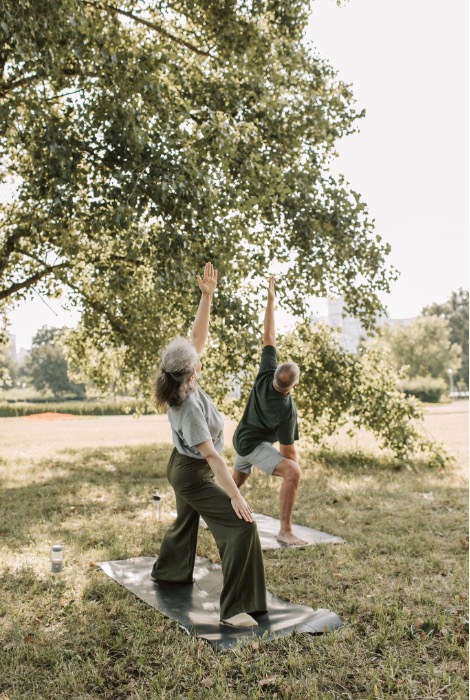
Breath-Focused Practices like slow breathing, box breathing, or structured breath exercises can be done on their own or combined with movement and directly support the vagus nerve. Even a few minutes of intentional breathing can shift how we feel.
Research suggests that structured breathing practices can improve mood and reduce anxiety in a relatively short amount of time.
Higher-intensity exercise such as high-intensity interval training (HIIT), heavy strength training, or competitive sports place higher demands on the body and temporarily increase stress hormones. While this is not for everyone, the positive effects of intense exercise come from how well our body recovers afterward. Without enough rest, hydration, and recovery time, this type of movement can keep our system feeling activated instead of regulated.
Regulating Your Nervous System with Consistency
Research suggests that the most effective approach is not focusing on one type of exercise, but combining different kinds of movement in a way that supports both activation and recovery. Activities like walking create a steady foundation for our nervous system.
Over time, this helps our body feel less reactive and more grounded. Slower forms of movement give our nervous system a chance to shift out of stress mode. They help our body learn how to feel safe and relaxed again.
Even a few minutes of intentional breathing or gentle movement each day can strengthen our body’s ability to return to calm. These small, consistent practices often have a bigger impact than occasional intense efforts.
While the type of movement is important, how our body responds to it matters even more. The most helpful movement is something we can do consistently without overwhelming ourselves. If it feels too intense or stressful, it may not support regulation. A helpful sign is feeling more settled, clear, or grounded after moving our body.
Exercise that leaves us feeling completely depleted or more anxious may need to be adjusted. If we’re not sure where to begin, let’s start small. We can take a short walk, add a few minutes of slow breathing, gently stretch or move our body. These simple steps work together to support movement, breathing, and recovery—three key elements of nervous system health. Movement doesn’t need to be complicated to be effective.
When done consistently and with awareness, it becomes one of the most powerful ways to help our body feel safer, calmer, and more balanced.
Bringing It All Together
Let’s remember we don’t need to fight our stress—we need to understand our nervous system. When we begin to support our vagus nerve, practice small daily regulation skills and care for our body’s basic needs we create a foundation for better emotional balance, increased resilience and greater ease in daily life. Our nervous system is protective, intelligent, and adaptable.
With small, consistent support, it can learn to move more easily between stress and calm—helping us feel not just functional, but grounded, present, and well. Instead of asking, “Why am I so stressed?”, try asking, “What does my nervous system need right now?”
This shifts us from self-criticism to self-support. The goal is not to force our body to calm down. Instead, we can give it clear signals of safety.

When to Seek Additional Support
While these strategies can be helpful, it is important to reach out for support if:
- You experience ongoing anxiety or panic
- You have difficulty sleeping for several days
- Stress is affecting your ability to function
- You feel overwhelmed most of the time
Support from a provider can help you better understand and care for your nervous system.
At Redwood Counseling Services, we understand that stress, anxiety, and nervous system dysregulation can make daily life feel exhausting. If these challenges are affecting your well-being, you do not have to navigate them alone. Our therapists provide compassionate, evidence-based support to help you better understand what you’re experiencing and develop practical tools for lasting change.
Call Redwood Counseling Services at (951) 652-2600 to learn more about our services or schedule an appointment. Taking the first step toward support can help you move from simply getting through the day to feeling more grounded, balanced, and in control.
By Lynn Ritchie, Wellness Coordinator, and Tobias Desjardins, LCSW, Clinical Director at Redwood Counseling, specializing in anxiety, stress management, and emotional wellness.
30-Day Nervous System Challenge
Commit to 3 minutes a day.
Choose:
- Morning breathing
- Midday reset
- Evening grounding
Consistency helps your nervous system learn safety through repetition. When you’re ready to incorporate lifestyle; drink more water, get consistent sleep and add the movement that suits you best.
Sources
- McEwen, B. S. (2007).
Physiology and neurobiology of stress and adaptation: Central role of the brain. - Godoy, L. D., Rossignoli, M. T., Delfino-Pereira, P., Garcia-Cairasco, N., & de Lima Umeoka, E. H. (2018). A Comprehensive Overview on Stress Neurobiology: Basic Concepts and Clinical Implications. Frontiers in behavioral neuroscience, 12, 127.
- Balban, M. Y., et al. (2023).
Brief structured respiration practices enhance mood and reduce physiological arousal. - Laborde, S., Allen, M. S., Borges, U., et al. (2022).
Effects of voluntary slow breathing on heart rate and heart rate variability: A systematic review and meta-analysis.
Movement & Nervous System Regulation
- Grässler, B., Thielmann, B., Böckelmann, I., & Hökelmann, A. (2021).
Effects of different training interventions on heart rate variability and cardiovascular health: A systematic review. - Zhang, W., Bi, S., & Luo, L. (2025).
The impact of long-term exercise interventions on heart rate variability: A meta-analysis. - Zou, L., Sasaki, J. E., Wei, G. X., et al. (2018).
Effects of mind–body exercises (Tai Chi/Yoga) on heart rate variability and perceived stress. - Sleep & Nervous System
- Joiner, W. J. (2018).
The neurobiological basis of sleep and sleep disorders. - Hydration & Cognitive Function
- Ganio, M. S., et al. (2011).
Mild dehydration impairs cognitive performance and mood. - Springer Research (Hydration & Brain Function)
Important
This information is for educational purposes only and is not a substitute for professional mental health care. Reading this does not establish a therapist-client relationship. If you are in crisis, call or text 988 or seek emergency support.