
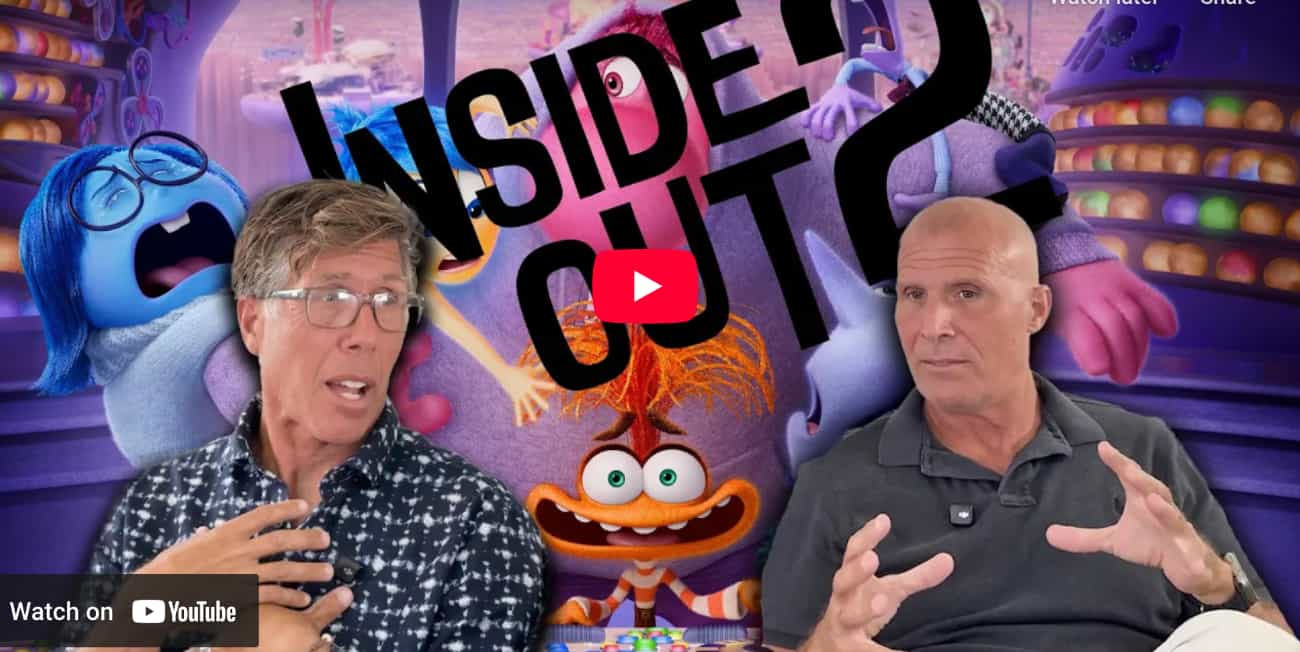
If you havent seen episode 2 of Wellness Onscreen, watch it here:
Pixar’s Inside Out 2 takes us right back inside Riley’s head — and this time, the emotions are more complicated. Anxiety, Envy, Embarrassment, and Ennui crash the party, showing us what growing up really feels like. And honestly? Pixar nailed it.
The film isn’t just entertaining — it’s a remarkably accurate snapshot of adolescence. Anxiety, overthinking, panic, and self-doubt come alive on-screen in ways both funny and painfully familiar. Here’s what the movie gets right, what it teaches us, and where to turn when your own “headquarters” feels crowded.
- Anxiety Isn’t the Villain
Anxiety takes center stage — and it feels so real. In truth, anxiety isn’t evil; it’s the brain’s overactive guard dog, barking too loud in an effort to keep us safe. Especially in adolescence, when the brain is still wiring up, that guard dog can take over the whole house.
Anxiety isn’t always the enemy; it’s your brain trying (sometimes too hard) to protect you. But when it runs the show, it can block out joy, creativity, and connection.
👉 If anxiety feels overwhelming, check out:
Mental Health America – Feelings & Emotions
Greater Good Science Center – Emotional Intelligence
- Losing Yourself Under Pressure
Riley’s biggest struggle is losing her sense of self. Anxiety whispers, “You’re not enough,” until she believes it. When feelings get bottled up, they don’t disappear — they leak out later as stress, burnout, or depression.
Growth isn’t about deleting feelings; it’s about making room for all of them and learning how to listen.
- Envy, Embarrassment, and Ennui — Oh My!
The new emotions remind us that growing up means complexity. Envy can spark ambition, embarrassment keeps us humble, and even boredom can push us to explore new things. The key isn’t to silence these feelings but to understand what they’re trying to tell us.
Each one brings information: Envy reveals desire. Embarrassment builds empathy. Ennui nudges us toward change.
- The Overthinking Loop
Overthinking is the brain’s trap — trying to control what can’t be controlled. It’s common but exhausting. Left unchecked, it drains joy and feeds doubt, just like Joy fading into the background of Riley’s mind.
Grounding skills like deep breathing, naming what you see around you, or moving your body can interrupt the loop.
- Panic Feels Real (Because It Is)
Riley’s panic attack is portrayed with painful accuracy — tunnel vision, racing heart, tidal-wave fear. Without guidance, those new emotions can feel terrifying. But simple tools such as grounding, paced breathing, or labeling sensations can calm the storm.
If you or someone you love is struggling:
Call or text 988 for the Suicide & Crisis Lifeline (U.S.)
Text HELLO to 741741 for the Crisis Text Line
The Trevor Project – crisis support for LGBTQ+ youth
- What Parents Should Know
Adolescence rewires the emotional system. It’s intense, beautiful, and sometimes overwhelming — for kids and parents alike.
Three things to remember:
- Anxiety is normal. All kids feel it, especially teens.
- Feelings need space. Bottled emotions grow bigger.
- Identity is fragile. Remind teens they’re more than their worries.
Skills for parents:
Name it: “Sounds like you’re anxious.”
Reframe it: “Anxiety’s trying to protect you, but it’s overreacting.”
Affirm them: “You’re kind, you’re creative, you’re strong.”
- You Can’t Mute Joy Forever
Just like Riley needs Joy back in the mix, we all need to remember what lights us up. Play, connection, laughter — these aren’t extras; they’re fuel for resilience.
Find small ways to boost joy:
- Action for Happiness – Monthly Calendars
- Verywell Mind – Simple Joy Hacks
Takeaway
Inside Out 2 reminds us that every emotion has a voice — and even when Anxiety hogs the mic, Joy’s still there, waiting to dance. The goal isn’t to silence any feeling but to listen, understand, and respond with compassion.
Let them all have a seat at the table — but don’t let any one of them drive forever.